
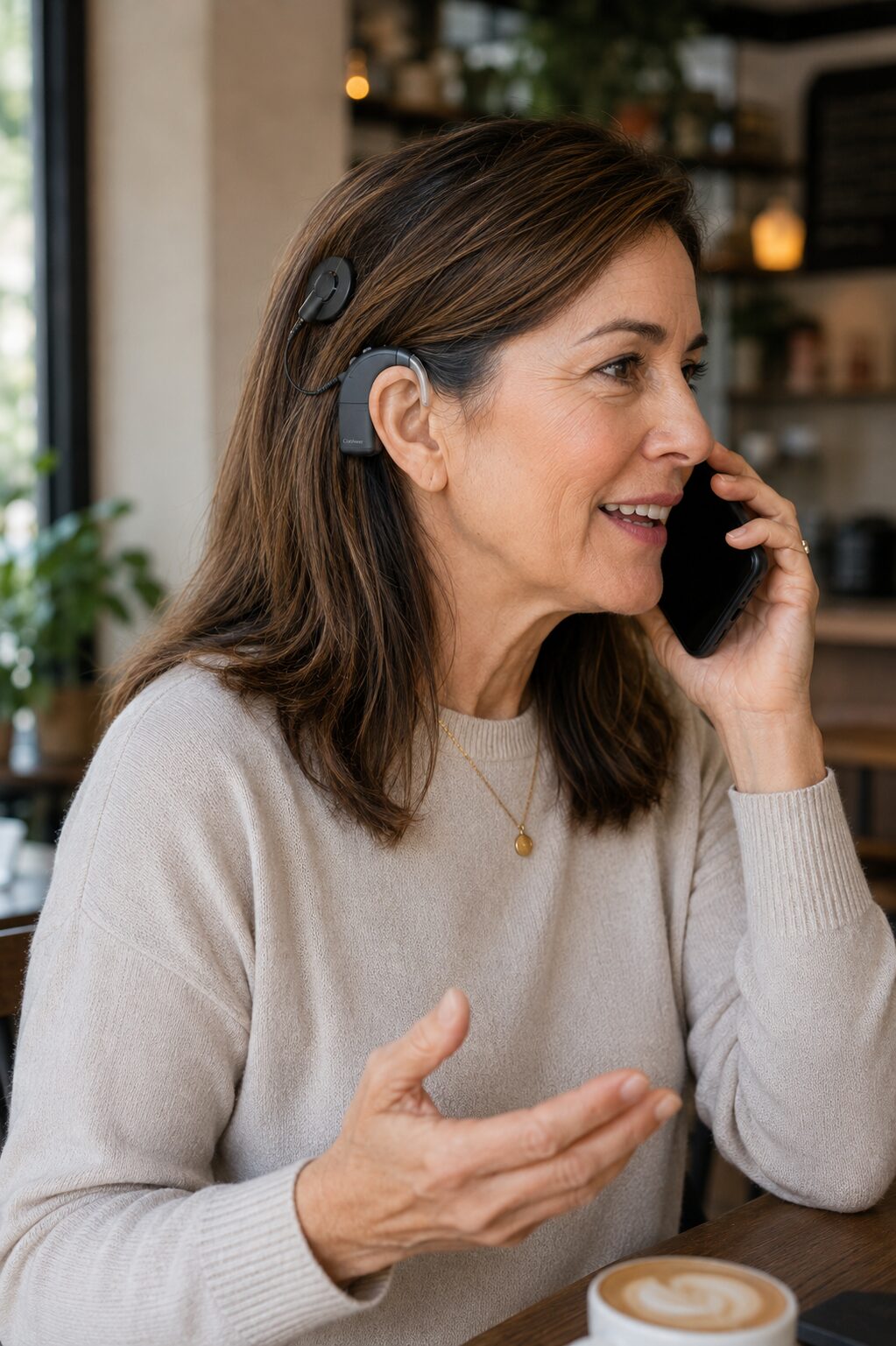
A cochlear implant gives your brain access to sound. The misconception is that it also restores your hearing on day one.
That gap between activation and clear understanding of speech is normal, and it’s exactly what structured auditory training is for. The thing that baffles me time and time again is that none of this is new. The research supporting auditory training has been around for years, but for one reason or another, it rarely gets the attention it deserves in the clinic. Recipients of cochlear implants ask for this kind of guidance constantly and don’t get a clear, cohesive outline of where to start.
So, I made it my goal to build Listening Between the Lines to give you a place to start. Here it is.
Why Rehab Matters After Activation
Many cochlear implant (CI) recipients assume the device alone will do the work, but the evidence points the other way: cochlear implants restore access to an auditory signal, while the brain still has to relearn how to interpret the new signal. That relearning happens faster and more efficiently with active listening skills training layered along with the device, not through the device alone.
Timing matters too. Research on CI aural rehabilitation and listening practice¹ consistently shows that starting structured auditory training as soon as possible after activation correlates with better speech recognition outcomes and higher reported quality of life down the line. The earlier the brain gets deliberate practice, the sooner it adapts.
What to Expect in the First Few Months
- Sound will feel strange, even mechanical, at first. That’s the auditory system adjusting to a new kind of input and not a sign something’s wrong.
- Progress isn’t linear. Good days and frustrating days both happen during mapping adjustments and early training. Expect fluctuation in your perceived growth.
- Working memory and focus matter as much as hearing itself. A large part of understanding speech through a cochlear implant is cognitive, meaning that holding onto partial information and filling in gaps is essential. Training that builds memory alongside listening skills tends to yield better outcomes than listening “drills” alone.
Apps Built for CI Recipients
Cochlear Americas CoPilot (free, Cochlear-brand recipients) — A self-guided app combining articles with interactive skill building activities. It’s designed specifically around the real-world situations that are challenging after activation such as workplaces, restaurants, phone calls.
MED-EL ReDi (free for MED-EL-brand recipients) — An AI-driven app that personalizes auditory and speech exercises to your current skill level and adjusts as you improve. It’s designed to be started immediately after activation and used independently, without needing a listening partner.
Advanced Bionics WordSuccess (free, formerly AB CLIX) — Built around a 45-level hierarchy of word-in-quiet and word-in-noise discrimination exercises. Works on it’s own or with a “listening coach” (a friend or family member reading word lists aloud), and adjusts the difficulty as you progress through the levels.
Advanced Bionics AB ListenFit (free) — Not a training app so much as a self-assessment tool consisting of quick phoneme and sentence-in-noise tests that let you track how your hearing is improving over time, independent of which training app you’re using.
Angel Sound (free, brand-agnostic) — Originally built for cochlear implant recipients at UT Dallas, this remains one of the most comprehensive free options, with a large exercise library spanning phoneme discrimination, sentence comprehension, and music listening, all of which adjust in difficulty automatically.
Hearoes (free, in-app purchases) — Built with input from audiologists and speech pathologists, this gamified app covers environmental sounds, Ling’s Sounds, vowels, and consonants across a multitude of activities and is a good option for recipients who want a broader library of everyday listening practice beyond a single manufacturer’s app.
A Simple Way to Structure Your Practice
- Start the week you’re activated, not the week you feel “ready.” Waiting for things to sound “normal” first can delay the gradual progress. However, for some recipients, beginning with app-based exercises on week 1 may be overwhelming. My recommendation is to connect with your cochlear implant audiologist to gauge your individual starting point based on your initial MAP.
- Match the app to your device brand first, since Cochlear, MED-EL, and Advanced Bionics tools are each tuned to their own processors.
- Add one brand-agnostic tool (Angel Sound or Hearoes) for variety and to avoid plateauing on a single exercise type.
- Practice in short, daily doses rather than occasional long sessions. Brief, consistent practice tends to be a more effective pattern.
- Recheck your progress at 4–6 weeks using a self-assessment tool or discuss with your audiologist, and adjust which skills you’re targeting from there.
If you need more guidance on where and how to begin your listening practice, Listening Between the Lines is here to help by discussing your unique listening profile and recommending the best starting point for faster, steadier growth.
The Bottom Line
Listening is more than hearing, and it’s a skill your brain can be trained to do better. The manufacturer apps and AI-driven tools listed above are excellent resources and many adapt to your responses through their own built-in algorithms which works well for a lot of recipients.
But an algorithm can only adjust to what it can measure. Some recipients need a more individualized approach, one that accounts for the fuller picture of their listening history, environment, and goals to see the best long-term results across a multitude of listening environments. It’s not just about the kinds of sound we hear, but in how we hear them.
Want a Plan Built Around Your Specific Needs?
Manufacturer and brand-agnostic apps are a great foundation, but which combination to use, in what sequence, and for how long depends on your specific listening profile which consists of your device, your activation timeline, listening profile and where you’re actually struggling day to day. That’s exactly where Listening Between the Lines comes in. Our team helps map out the right sequence of exercises and resources for your individual timeline, so your effort goes toward the skills that will actually make meaningful progress and take out a lot of the guesswork.
Explore how we can guide your listening journey → Learn more about Our Programs.
Download the PDF Companion Guide HERE as a free reference for cochlear implant listening practice.
— Dr. Ana | Audiologist & Founder, Listening Between the Lines
Disclaimer: This post is educational and isn’t a substitute for individualized clinical and medical care.
¹ When to Start Computer-Based Auditory Training After Cochlear Implantation: Effects on Quality of Life and Speech Recognition (Otology & Neurotology, Oct 2024)


